


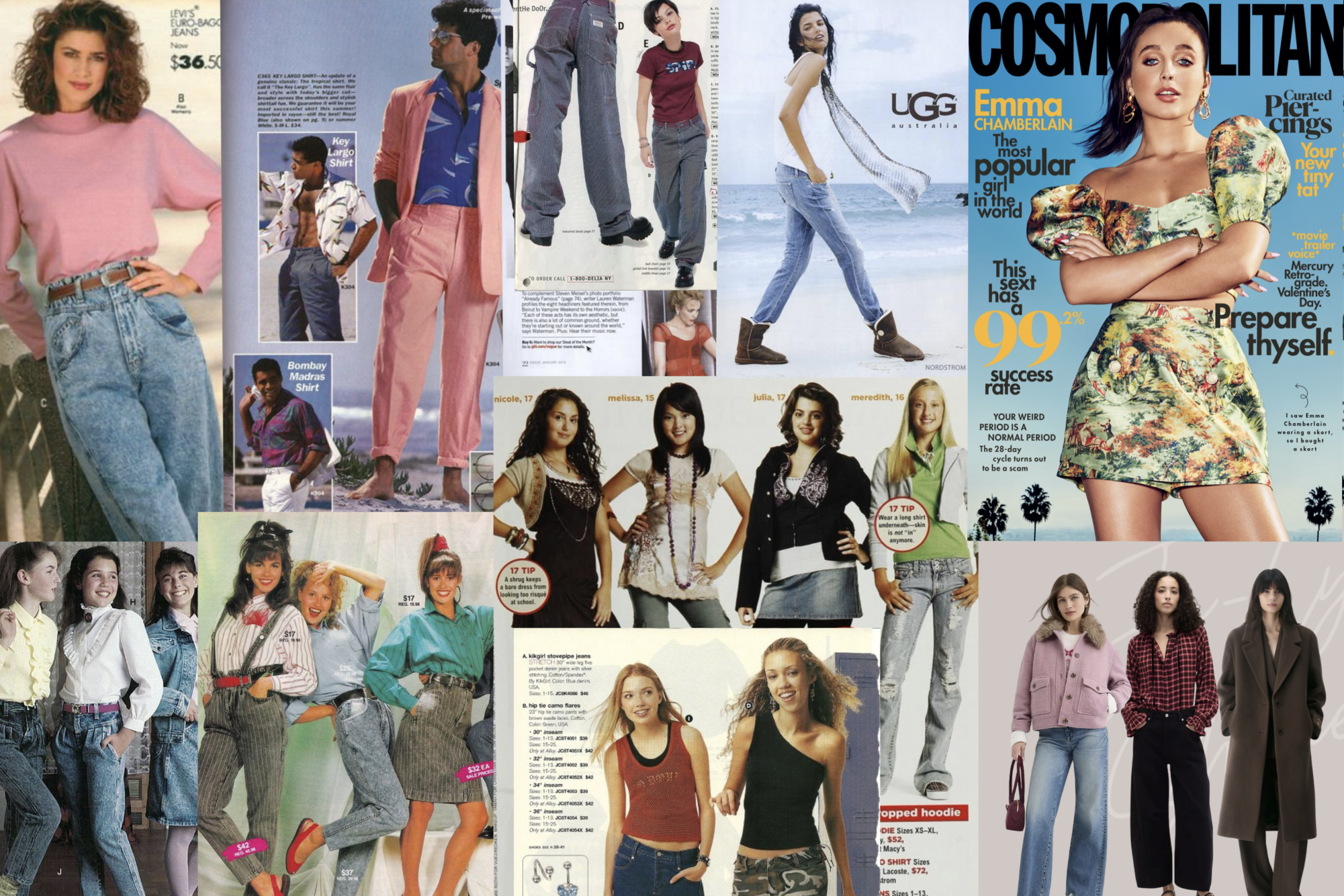
As the youngest child in a family of 8, I never had to worry about clothes, because all my outfits were made up of older sister’s hand me downs, which were in turn my eldest sister’s hand me downs, which had been purchased years before I was born. I hated having to wear clothes that weren’t bought for me but as I’ve grown older and experienced the world of clothing shopping, I see the value in vintage apparel. New clothes suck. Not only do most items of clothing begin pilling and thinning quickly but they wear out altogether and needed replacing, usually within a year of purchasing. It seems like the outfits I was buying new to wear in my everyday life aren’t meant to be worn at all. But when I look at my thrift store garments and hand me downs, I notice that, despite their age, they survive the years better than my brand-new items.
Something is seriously wrong with the modern clothing industry. Something has changed on the manufacturing side and this something can be seen when you take a closer look at the recent shift in consumer behavior, the composition of modern fabrics, and the transition to foreign labor.
When I say that garments aren’t as high quality as they used to be, I’m not pushing a nostalgic, back in my day agenda. It’s reality. Looking at the book Fashionopolis, released in 2019 by Dana Thomas, some statistics are particularly striking. For one, the average American bought 12 new items of clothing a year in 1980. Fast forward to today, and the average American owns around 103 items of clothing, buys 68 new items a year and discards an estimated 80 pounds of clothing annually.
This makes one thing obvious. Clothes today, at least for the average American, don’t stick around. They’re bought, used, and discarded at a rate unrecognizable to individuals as recently as 1980. So, what changed?
Clothes are fast now. I can hop on my phone and pull up a website that will sell me a shirt for as little as 3 dollars. On a shirt that only costs $3, a worker could be making less than .20 cents. After all, why would a luxury brand want to miss out on even more profit by choosing domestic manufacturing over literal slavery somewhere in Asia?
Everyone is doing it, and everyone has been doing it for years. So that leaves the consumer backed up against a wall, stuck in a cycle of buying and discarding and replacing, because what other options are there?
So. New clothes suck. But it’s apparent that the reasons they suck are far more pressing than the issues they’ve caused me through wearing them. Due to manufacturing in foreign countries and the shift to synthetics, clothes, and the people who craft them are treated as disposable, when they are not. So, to some degree, I was lucky to be forced to wear ill-fitting clothing that had seen the wear and tear from my sibling’s childhoods, because these older garments were carefully constructed from natural fibers, making them built to last.